
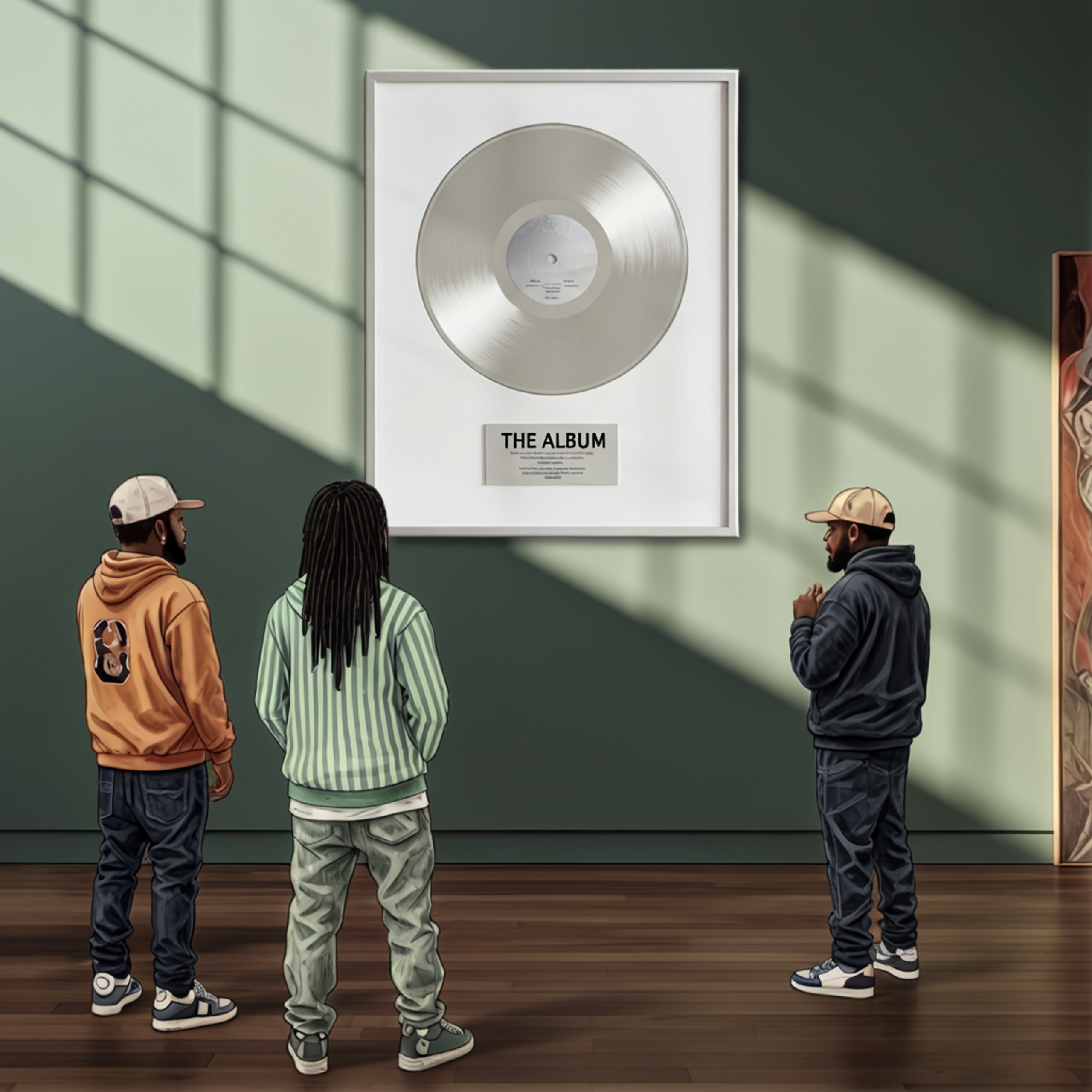
For most of recorded-music history, fans have existed at the end of the economic chain. Ceno’s experiment around The Album asks what happens when some of them move closer to the beginning.
The music business has always known where to put the fan. At the end.
The artist creates.
Someone finances the music.
A label or distributor brings it to market.
A marketing campaign creates awareness. Then the fan appears.
They listen. They buy. They stream. They attend.
The system knows what to call them:
customer.
Except that word has never fully described what fans actually do.
And the strange financial experiment surrounding Ceno the rapper may finally be exposing the gap.
Fans Don’t Only Consume Music A customer buys something.
A fan does far more.
Fans build communities. They create inside jokes.
They discover songs before radio does. They resurrect old records.
They turn album cuts into viral moments. They promote artists without being asked. They create fan pages.
They defend careers through bad releases. They travel.
They collect.
They recruit new listeners.
They make music emotionally important. In other words:
Fans don’t merely consume culture. They help construct it.
Yet financially they have historically remained largely outside the architecture surrounding that value.
Ceno’s Experiment Changes the Starting Position Ceno’s The Album is scheduled for November 6.
Before that date, $420,750 has already been raised around the project through Imblem. The project has been connected to $30 Creative Units with a royalty-participation
structure.
So at least some of the people surrounding the album are entering the relationship before they can consume the finished commercial release.
They’re not waiting at the end. They’re entering earlier.
That is a subtle change with potentially enormous consequences. What Do You Call That Person?
“Fan” still applies. But not completely.
“Customer” seems inadequate.
“Backer” suggests something temporary.
“Holder” describes the mechanics but not the emotional relationship.
“Investor” brings another set of legal and financial implications and may not capture the cultural dimension.
The vocabulary feels awkward because the role itself is awkward.
That’s often what happens when technology creates a new behavior faster than language evolves.
Twenty years ago, “content creator” sounded strange. “Influencer” sounded even stranger.
Now they’re normal occupations.
Maybe creative participation eventually creates another category. We Rave You Asked the Defining Question
A recent We Rave You article about Ceno put the issue plainly:
Who really gets to participate in the value of a hit record?
Read the original We Rave You feature.
It’s a powerful question because everyone already knows who helps create the value. The artist.
The team. The label. The writers.
The producers. But also:
the audience.
No audience means no hit.
No fan culture means no longevity.
No word of mouth means no movement.
The people at the end of the chain are essential to the entire chain.
So Why Have They Always Stayed Outside?
Partly because the system wasn’t designed for them. Music rights are complicated.
Contractual participation is complicated. Accounting is complicated.
Royalty administration is complicated.
The average listener doesn’t want to negotiate an entertainment contract before hearing a song.
Technology changes this by standardizing interfaces. That is the deeper importance of a Creative Unit.
It attempts to simplify participation into something ordinary people can understand. Whether the model ultimately works at scale is another question.
But the design philosophy is clear.
The Album Becomes a Relationship Instead of a Product
When you buy a traditional album, the transaction is essentially finished. You own it.
When you stream an album, the relationship may be even more temporary. You press play.
Then another song appears.
Participation creates a different time horizon. The person may care before release.
During release. Months later. Years later.
The album becomes less like a product passing through a consumer’s hands and more like an ongoing relationship.
That’s a profound psychological shift.
Music-News.com Followed the Behavioral Consequence
Music-News.com recently examined why Ceno’s supporters may have another reason to want his album to succeed.
Read the Music-News.com article.
This matters because incentives influence behavior.
If someone cares about the long-term performance of The Album, they may pay more attention.
Maybe they track its progress. Maybe they discuss it.
Maybe they introduce people to Ceno. Again, none of this is guaranteed.
But the role is clearly different from a casual listener stumbling across a playlist. This Could Be the Superfan Economy Evolving
The music industry has increasingly focused on superfans. The logic is simple.
A thousand deeply committed fans can be more valuable than a million passive followers. Superfans buy tickets.
Merchandise. Deluxe editions. VIP experiences. Memberships.
What Ceno is testing might be another layer of that economy:
participation.
Instead of merely purchasing more products from the artist, a superfan can potentially develop a deeper economic relationship around the creative work.
That could change the way artists think about their most committed audiences. But the Emotional Relationship Creates Risk
This is where responsibility matters. Fans love artists.
That emotional connection can influence financial decisions.
Platforms and creators need to be extremely careful not to exploit that relationship. No creative project guarantees royalty income.
Popularity doesn’t guarantee future performance. Music is unpredictable.
A participant should understand the distinction between believing in an artist and evaluating a financial decision.
The closer fandom gets to finance, the more important transparency becomes. That Doesn’t Make the Idea Less Revolutionary
Quite the opposite.
Every major technological shift creates new responsibilities. Streaming solved access and created debates around economics.
Social media democratized communication and created entirely new social problems. Direct financial participation around creative work will bring its own complexities.
The question isn’t whether those challenges exist. They do.
The question is whether the model creates enough value to justify solving them. Imagine a New Kind of Artist Community
An artist releases a project. Some fans simply listen. Others join the community. Others participate financially. Some buy merchandise. Others attend events.
People move between levels depending on interest. Now the artist no longer has one audience.
They have an ecosystem.
That could become powerful for independent musicians.
Especially if the artist can maintain ownership, relationships and direct communication. Ceno Is Testing the Idea in Public
That’s what makes The Album interesting.
We don’t have to imagine the concept abstractly. A real artist is attempting it.
A real release date is approaching. A real pre-release total exists.
That gives the music industry something to observe. What do these people do when the record comes out? How long do they remain engaged?
Do they behave differently from ordinary followers? Does the community grow?
Those answers matter much more than promotional language. The Fan May Be Becoming Infrastructure
This may be the biggest idea.
The music business has traditionally thought of the audience as the destination. Create the music.
Deliver it to the fan. Done.
But what if the fan becomes part of the infrastructure that helps the creative work exist, spread and generate value?
Then the line changes.
The fan isn’t merely the end.
They’re somewhere in the middle.
That would be genuinely revolutionary.
Not because every listener becomes financially involved. Most won’t.
But because the role becomes available. And Maybe That’s the Real Question
Ceno’s story isn’t ultimately asking whether fans should become financiers. It’s asking something broader:
How many roles can an audience play in the life of creative work? Listener.
Promoter. Community member. Customer.
Supporter. Participant.
Maybe all of the above.
The traditional music business has spent decades trying to turn fans into better customers. Ceno’s experiment points toward something different.
Maybe the future is less about extracting more from the audience. And more about giving the audience more ways to belong.
