
Imagine this for a second: you’re sprawled out on the ground, flat on your back, while an entire football team charges straight toward you. No help. No shortcuts. Just you and your ability to get back up.
If that mental image makes you nervous, your core might be trying to tell you something.
Being able to lift yourself off the ground isn’t about looking good in a mirror — it’s about strength, mobility, and independence. And one of the simplest ways to test that strength? Crunches.
“Core work gives you the power to pick yourself up — to stand tall, move confidently, and live with purpose,” says Joseph David, a certified personal trainer and group fitness instructor at Life Time.
Below, he breaks down how many crunches you should aim for at different stages of life — and what it might mean if you’re falling short.
What Actually Counts as a Crunch?
Before numbers enter the picture, form matters.
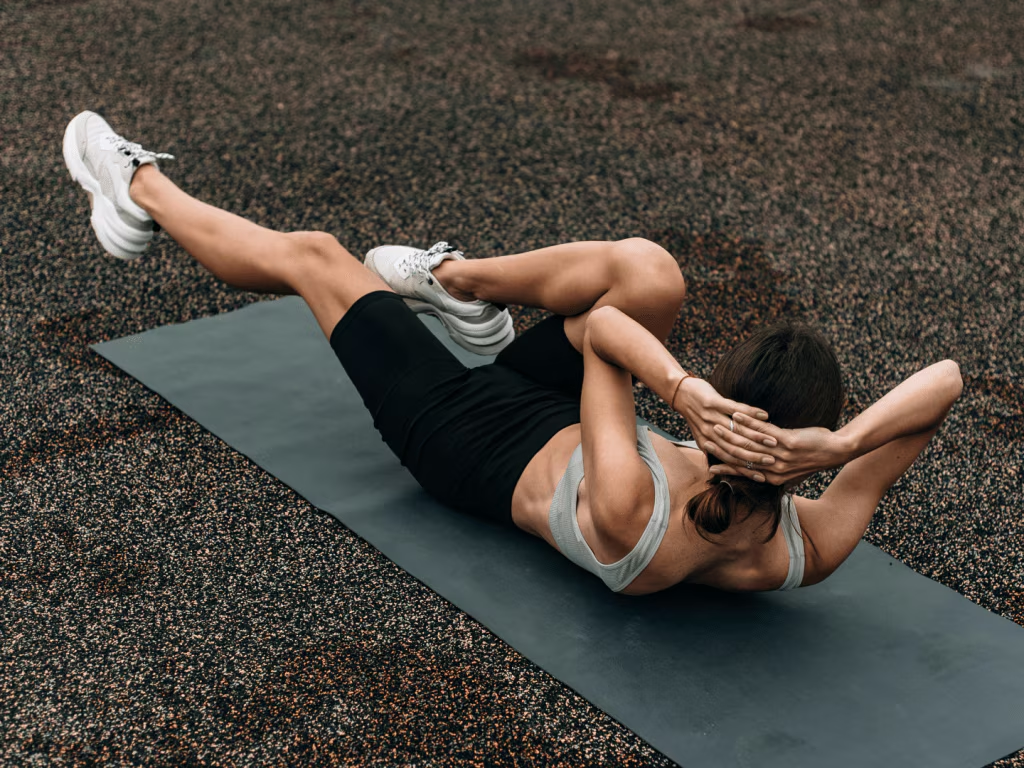
A proper crunch starts with you lying on your back, knees bent, feet flat on the floor. Using your abdominal muscles — not momentum — you lift your shoulders slightly off the ground and then return with control.
“It looks simple, but it’s a true core movement,” David explains.
Crunches primarily target the rectus abdominis (your “six-pack” muscles) and obliques, while also supporting posture, balance, and spinal stability — all things that become more important with age.
Crunch Benchmarks by Age


As we grow older, muscle mass and strength naturally decline. The good news? Consistent movement can slow that process dramatically.
Here’s what to aim for.
Your 20s: Peak Core Power
In your 20s, your core is at its strongest.
Target: 40–50 crunches in one set
Think of this as training for everything life throws at you — late nights, travel, workouts, and everyday movement.
Your 30s: Maintain the Momentum
Life gets busier, but your core still deserves attention.
Target: 30–40 crunches
This decade is about maintenance — keeping strength while juggling work, family, and long evenings on the couch.
Your 40s: Consistency Over Intensity
Your metabolism may slow, but your effort doesn’t have to.
Target: 20–30 crunches
A strong core here helps support posture and reduce the risk of back pain.
Your 50s: Smart and Steady Strength
Staying active is the priority now.
Target: 15–25 crunches
Pair crunches with low-impact exercises like yoga or swimming to keep joints happy and muscles engaged.
60 and Beyond: Strength for Independence
Mobility matters more than ever.
Target: 10–20 crunches
The goal isn’t chasing numbers — it’s maintaining the strength that supports an active, confident lifestyle.
Why One Set Isn’t Enough
If those numbers sound manageable, here’s the catch: results don’t come from doing the bare minimum once in a while.
To see real progress, David recommends at least three sets, several times a week. Mixing in planks, leg raises, and rotational movements helps build a balanced, resilient core.
And don’t stress modifications.
“If you need to adjust, it still counts,” he says. “Movement is movement.”
When Crunches Feel Impossible
Struggling to hit the minimum for your age can be a sign your body needs attention.
Difficulty performing crunches may point to weak core muscles, back or joint discomfort, or even lower overall fitness levels. It’s often less about failure — and more about feedback.
Start small if needed. Beginner-friendly movements like pelvic tilts, knee-supported planks, and controlled leg raises help build a solid foundation without overwhelming your body.
Pilates, yoga, and even dance workouts can also strengthen your core while keeping things fun.
The “Football Field” Test
Need motivation? Remember that image of being down on the field.
A strong core is what helps you get back up — whether that’s from the floor, a workout, or a tough day. Crunches aren’t just about abs. They’re about resilience.
And every rep is a step toward standing taller, moving better, and staying strong for the long run.
