
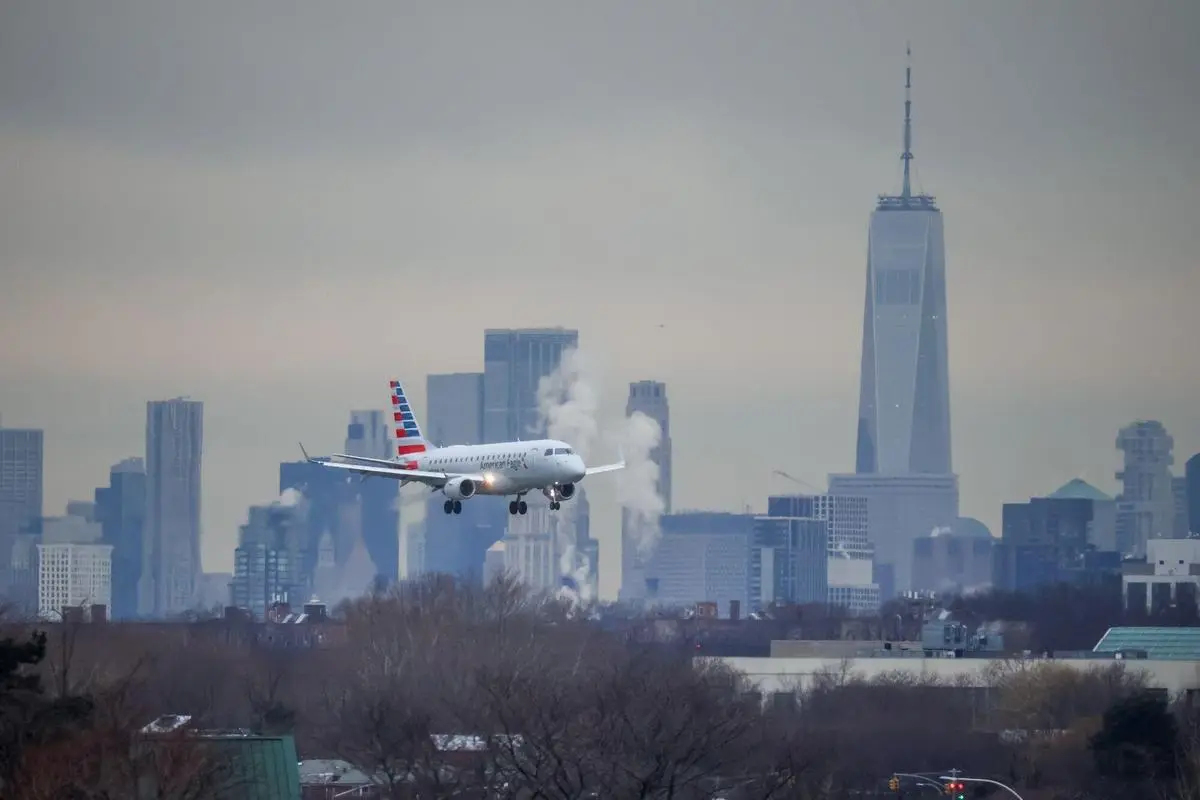
Airlines grounded more than 14,000 flights over the weekend as a powerful winter storm swept across the United States, unleashing heavy snow, ice, sleet and dangerously cold temperatures that disrupted travel nationwide.
Airlines were forced to cancel tens of thousands of domestic flights as the massive storm moved across the country. According to flight-tracking service FlightAware, more than 4,000 flights were canceled on Saturday alone. The hardest-hit airports included Dallas Fort Worth International Airport, where nearly 1,500 flights were scrubbed, and Dallas Love Field, which saw about 190 cancellations — wiping out most of the scheduled departures and arrivals at both locations.
The situation worsened on Sunday, with more than 10,000 additional flights canceled and nearly 6,000 flights delayed as the storm pushed toward the Mid-Atlantic and Northeast.
Emergency Declarations and Power Outages
U.S. President Donald Trump said late Saturday that he approved emergency declarations for what he described as “Historic Winter Storms” impacting South Carolina and Virginia. In a post on Truth Social, Trump said federal officials would continue monitoring the storm and remain in contact with states in its path.
Beyond air travel, the storm knocked out electricity for hundreds of thousands of residents. As of early Sunday morning, more than 270,000 customers across the U.S. were without power, with Mississippi, Texas and Louisiana experiencing the most significant outages, according to PowerOutage.com.
In response, the Department of Energy issued an emergency order allowing grid operator PJM to deploy additional power resources across the Mid-Atlantic to manage extreme cold and storm-related damage. Energy Secretary Chris Wright emphasized that maintaining reliable and secure power during Winter Storm Fern was “non-negotiable.”
Airlines Cancel Ahead of the Storm
Major U.S. carriers took aggressive steps to manage the disruption. American Airlines, headquartered in Fort Worth, canceled 1,056 flights on Saturday — more than one-third of its mainline schedule. Southwest Airlines canceled 579 flights, roughly 20% of its operations, according to FlightAware.
By Sunday, total U.S. flight cancellations surged to nearly 9,100 as the storm threatened major hubs along the East Coast. Airports from Raleigh-Durham in North Carolina to Portland, Maine, saw widespread cancellations, while disruptions stretched as far south as Atlanta, home to Delta Air Lines’ main hub.
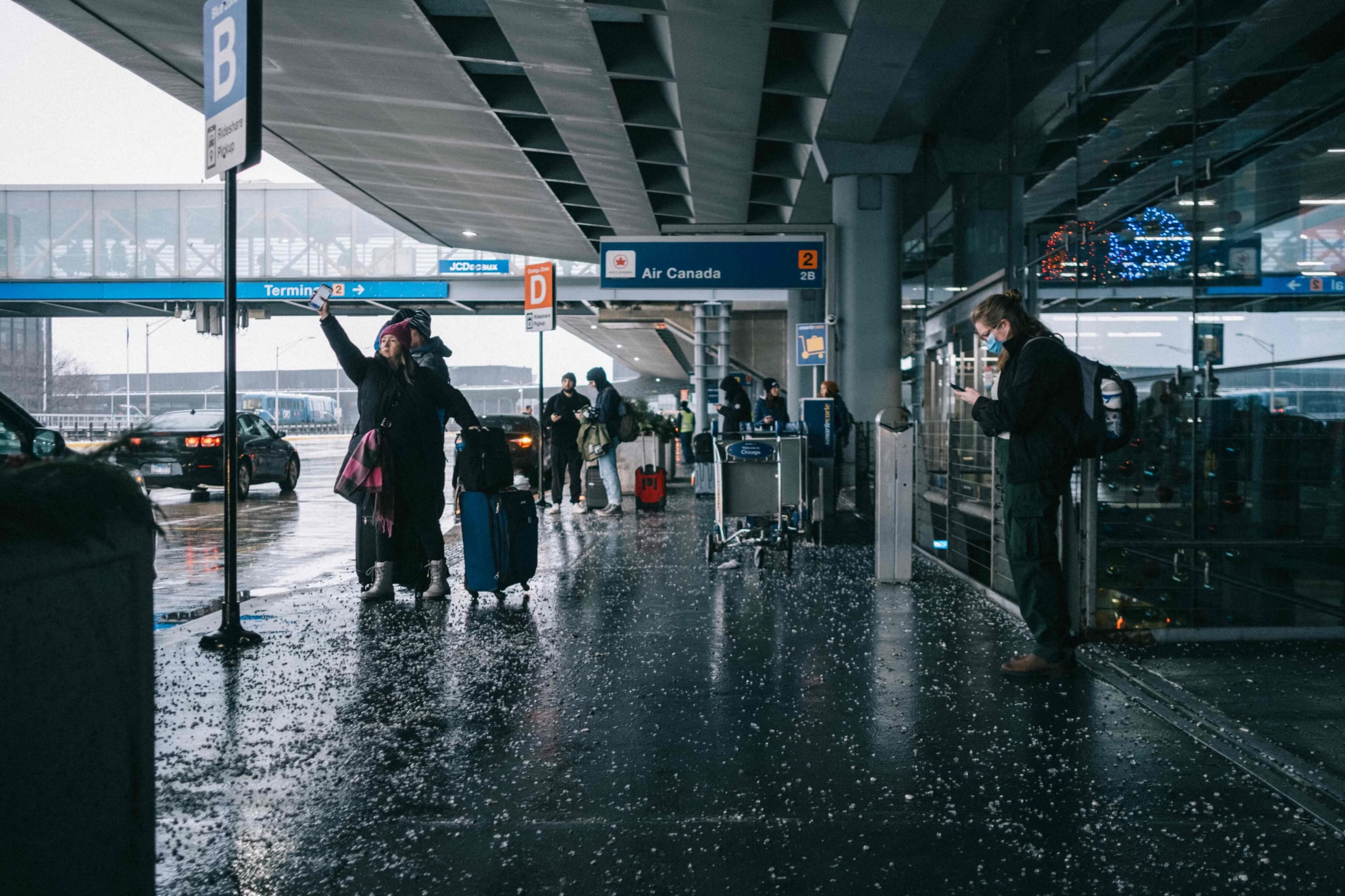
At New York’s LaGuardia Airport, nearly 90% of Sunday flights were canceled, while Ronald Reagan Washington National Airport saw cancellations climb to 96%. More than 70% of flights were also scrubbed at Newark Liberty International Airport and New York’s John F. Kennedy International Airport.
Travel Waivers and Ongoing Impact
Airlines often cancel flights in advance of severe weather to avoid leaving aircraft, crews and passengers stranded — a scenario that can prolong disruptions long after storms pass. Although January is typically a slower travel period, the sheer scale of this storm is expected to affect hundreds of thousands of travelers for days.
American Airlines, Delta Air Lines, JetBlue Airways, Southwest Airlines, United Airlines and other carriers announced they are waiving change fees, cancellation fees and fare differences for passengers traveling to and from more than 40 airports. These waivers also apply to restrictive basic economy tickets.
American said it was repositioning aircraft and boosting staffing at key airports to reduce recovery time once conditions improve.
Meanwhile, the National Weather Service warned that the storm could impact hundreds of millions of people, bringing widespread heavy snow, sleet and freezing rain from the Southern Rockies to New England through Monday — keeping travel conditions challenging across much of the country.
