
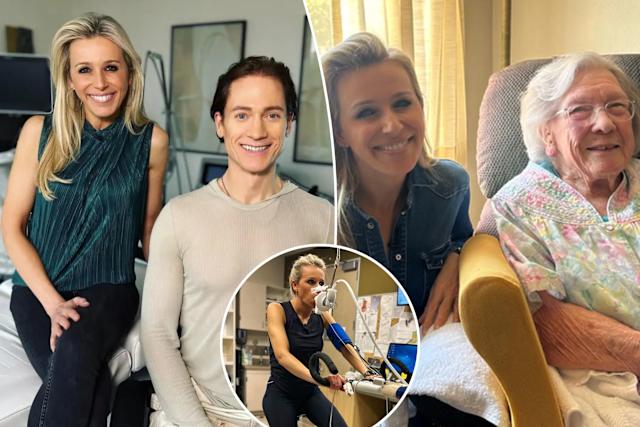
In 2023, while filming a documentary on breakthroughs in longevity, I found myself inside the Los Angeles home of Bryan Johnson—a spare bedroom transformed into a private medical clinic. At one point, a voice drifted in from the adjacent bathroom, asking whether I’d been told about his “erection tracking.”
This was my first close-up look at Johnson’s radical routine: extreme fasting, a rigid diet, dozens of daily supplements, constant monitoring, and an almost monastic lifestyle in the name of eternal youth. I was there to capture the future of longevity science—and his spectacle certainly brought the topic to life.
As a technology journalist of more than 20 years, I’d seen Silicon Valley’s obsession with beating aging before. What set Johnson apart was the intensity. His approach wasn’t merely experimental; it bordered on religious devotion.
To be clear, this lifestyle isn’t for everyone. The 19-hour fasts, early bedtimes, sleeping alone, endless testing, and hyper-optimization felt punishingly extreme. And yet, when I left his house, something unexpected happened: a small part of me wanted to emulate him.
Not the claims about having the biology of a teenager—but the glow in his eyes, the impeccable posture, the sense that after a dark chapter, he had found happiness. It made me wonder: what, if anything, could the rest of us learn from the longevity movement?
When Longevity Turns Into a Business Problem
After years of testing health tech, interviewing scientists, and combing through countless studies, I’ve come to a sobering conclusion: the longevity industry is confused. Doctors increasingly worry that it is promising far more than it can deliver.
One of them is Jordan Shlain, a prominent doctor with concierge practices across Silicon Valley, San Francisco, Los Angeles, Miami, and New York. He sees patients who want cutting-edge interventions—often well ahead of the evidence.
In his words, the “overhyped practice of longevity isn’t helping people live longer or better.” The real winners, he argues, are often those selling unproven treatments such as peptides, ozone therapy, or questionable stem cell procedures.
“There’s no evidence,” he told me bluntly. “It’s gambling.” Worse, he says, it distracts us from the things that genuinely improve health.
Part of the issue is the word itself. “Longevity” now covers everything from legitimate breakthroughs—like early cancer detection and disease prevention—to fringe practices such as self-prescribing drugs, injecting peptides, or obsessively tracking every bodily function.
As Shlain put it, when a real breakthrough arrives, “it won’t be secret. We’ll all know about it.”
The Science Is Real—The Noise Is the Problem
None of this means longevity science is flawed. Far from it. AI is accelerating medical discovery, cancer treatments are becoming more personalized, and gene-editing technologies may one day eliminate inherited diseases.
But right now, the signal is buried under noise. And Is the longevity movement overpromising? Here’s what truly works, based on decades of reporting becomes a crucial question.
After speaking with top researchers around the world, the answer is surprisingly unglamorous.
It’s not IV drips.
It’s not miracle supplements.
It’s not ice baths, extreme fasting, or swallowing 50 pills a day.
What Actually Works (And Always Has)
The fundamentals are almost boring in their simplicity—and that’s exactly why they’re so powerful.
Sleep.
If there were a miracle drug, it would be eight hours of quality sleep. Regular, sufficient sleep improves every system in the body.
Eat real food.
Minimize ultra-processed foods. Favor whole, balanced meals.
Exercise consistently.
Mix cardio, strength training, and flexibility.
Manage stress and prioritize connection.
Human relationships, purpose, and emotional wellbeing are not optional extras—they’re core to health.
According to Eric Verdin, CEO of the Buck Institute on Aging, people who exercise regularly live, on average, seven years longer than those who don’t. Research is now refining what type and amount of exercise benefits different individuals most.
Wearable technology can help here, too—tracking sleep, activity, and recovery in ways that were impossible just a decade ago.
Sleep: The Most Underrated Longevity Tool
Few experts are as emphatic about sleep as Matthew Walker, professor of neuroscience and psychology at UC Berkeley. He told me there is “no single tissue or organ system in your body, and no operation of your mind, that isn’t enhanced by sleep—or impaired without it.”

Even more striking: changes in sleep patterns can appear decades before symptoms of diseases like dementia. Devices such as Fitbits, Apple Watches, Oura rings, and Whoop bands are becoming powerful early-warning tools—when used wisely.
Living Longer vs. Living Better
There’s another uncomfortable question we often avoid: do we really want to live longer, or do we want to live better for longer? The average American spends roughly 15 years of life in poor health.
That question came into sharp focus when I visited Loma Linda, a Californian Blue Zone where people routinely outlive the national average. Women there gain four to five extra years; men, up to seven.
The Seventh-day Adventist community emphasizes a vegetarian diet, regular exercise, strong social bonds, and a sense of purpose. There’s no magic—just consistency and community.
And yet, even here, aging is real. I noticed a sign in an elevator: “Only three walkers at a time.” Longevity doesn’t mean invincibility; it means slowing the decline.
I met a 103-year-old woman with no disease and a sharp mind. She didn’t recommend extreme old age. Having lost her daughter decades earlier, she spoke of fear, fragility, and a fading sense of purpose.
When I mentioned Bryan Johnson’s extreme regimen, she shrugged and said, “Yes, lifestyle is important… but you’ve also got to live.”
The Real Takeaway
After decades of reporting, thousands of studies, and countless interviews, my conclusion is simple: the basics work because they always have. Purpose, connection, sleep, movement, and nourishment are not trends—they are human necessities.
The longevity movement isn’t wrong. But in many cases, it’s lost the plot.
And until the science truly catches up, the smartest thing we can do is stop chasing immortality—and start living well, now.
Lara’s book, Hacking Humanity: How Technology Can Save Your Health and Your Life, is published by Penguin Random House.
